Skin boosters, explained.
The thing I hear most from clients in their late thirties and forties is “my skin just looks tired, even when I’m not”. They’re sleeping fine. They’re drinking water. The skincare routine is solid. And the face in the mirror still looks like it’s carrying something heavier than it actually is.
That’s the gap skin boosters were designed to fill.
What skin boosters are.
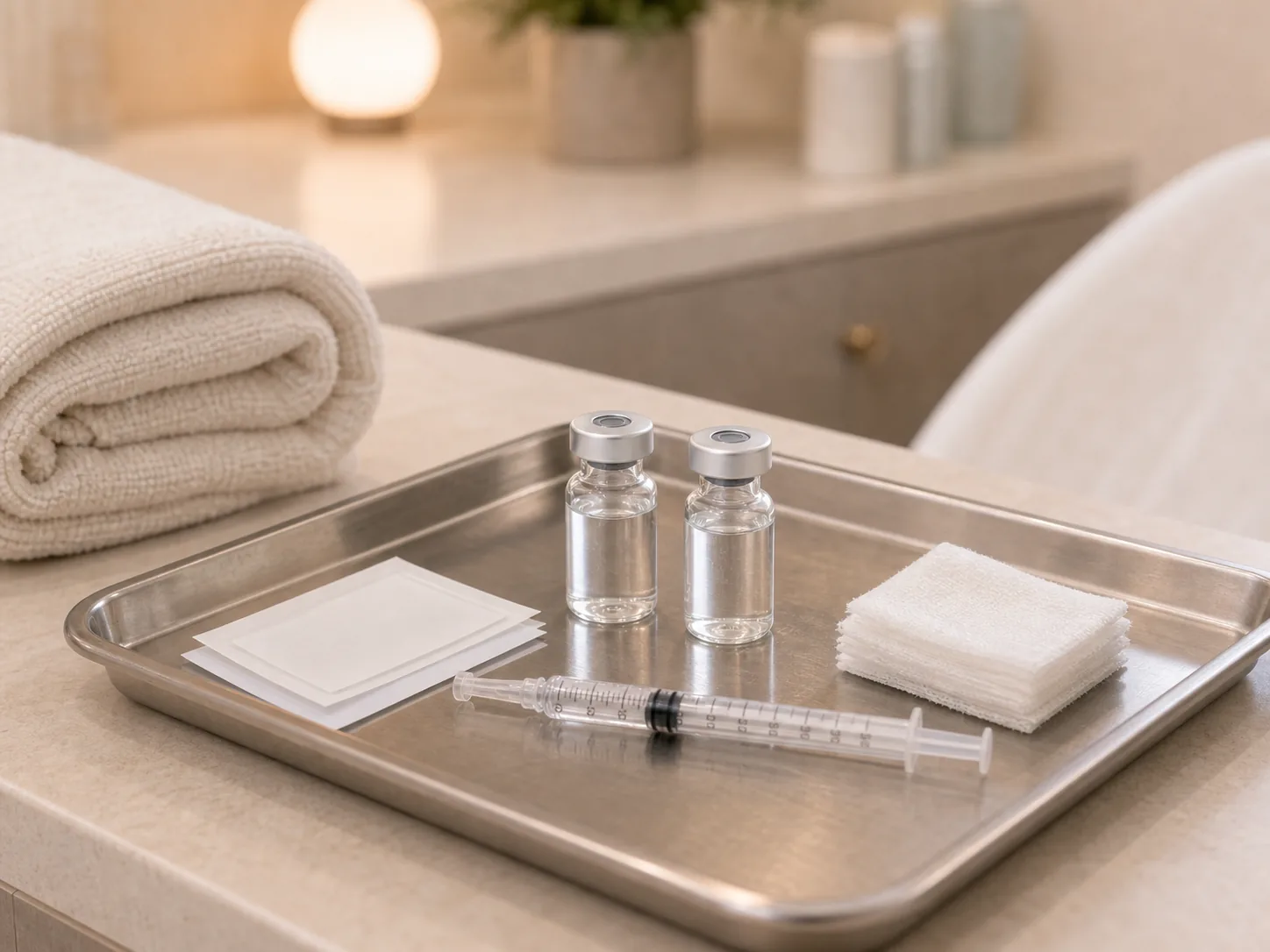
Skin boosters are injectable hyaluronic acid. Sometimes blended with amino acids, vitamins or biostimulators. Placed in micro-droplets across the face. They’re not filler. They don’t add structure or volume. They don’t change your features.
What they do is reintroduce the raw materials your skin uses to be healthy: hydration molecules, building blocks for new collagen, scaffolding for your skin’s natural elastin production. The change is in your skin quality. Bounce, brightness, water-binding capacity, texture. Not in your face shape.
People notice you look well. They don’t notice why. That’s the point.
What they don’t do.
Worth being clear on the limits because the marketing on these can be wishful:
- They don’t fill volume. If your concern is hollow under-eyes, sagging mid-face or thin lips, that’s a different category of treatment.
- They don’t give you instant results. Most clients see noticeable change after the second session, around 6 weeks in.
- They don’t replace skincare. Boosters work best when paired with a proper skincare routine and SPF. They’re not a shortcut around the basics.
- They don’t treat melasma or specific pigmentation. Different tools for that.
The four products I actually use.
Seventy Hyal 2000 · from £110
The straightforward deep-hydration choice. A non-stabilised hyaluronic that delivers immediate hydration to the dermis. Best for clients with dehydrated, tight, flat-looking skin. Two sessions four weeks apart, then maintenance every 4-6 months. Most clients see a noticeable change after session two. The skin feels softer, fuller, holds water properly again.
Good for: first-time skin booster client; dehydrated skin; pre-event glow; anyone wanting a no-fuss entry to skin boosters.
Lumi Pro · from £120
Hyaluronic plus brightening agents. The job here is hydration plus tone-evening. Targeting dull, sallow or sun-tired complexions. Best results when paired with proper SPF compliance afterwards.
Good for: clients with dull, lacklustre skin; sun damage that’s left a tone unevenness; anyone who’d say “I want to look brighter, not just hydrated”.
Jalupro Classic · from £150
Hyaluronic acid plus four amino acids (glycine, proline, lysine, alanine). Those amino acids are the literal building blocks of collagen and elastin. Effectively, you’re giving the cells the raw material to make new tissue.
This is the one I most commonly use as a pre-treatment for clients about to have filler. It preps the skin so the filler integrates better. Also great for sun-damaged skin that needs cellular repair, or post-pregnancy skin that’s lost density.
Good for: pre-filler skin prep; sun-damaged or post-pregnancy skin; clients in their 40s and 50s who want cellular-level repair.
Profhilo · from £220
Pure stabilised hyaluronic acid. High concentration, slow-release. Distinct from the others because of how it’s placed: five precise injection points per side of the face, at anatomical landmarks called “BAP” (Bio-Aesthetic Points), where the product spreads through the layers over time.
Profhilo earns its higher price tag through the density of the product and the specific placement protocol. Two sessions four weeks apart. Most clients see the change at the 6-8 week mark and it builds further to 12 weeks.
Good for: full-face skin quality protocol; clients who want a single, thorough hydrating treatment rather than ongoing maintenance; pre-event prep with a 6-week lead time.
Which one is right for you?
This is genuinely the consultation conversation, not a flowchart. But broad guidance:
- Brand new to skin boosters and unsure → Seventy Hyal
- Skin looks dull more than dehydrated → Lumi Pro
- About to have filler, or post-pregnancy skin → Jalupro Classic
- Want a single comprehensive treatment with the longest credentials → Profhilo
What to expect on the day
Numbing cream goes on for 15 minutes. The injections themselves are very superficial. You’ll feel pin-prick pressure rather than sharp pain. For most boosters I work in micro-droplets across the cheeks and jawline, sometimes neck and décolleté. For Profhilo specifically, it’s those five precise points per side.
You’ll see small raised bumps where each injection went. These settle within 12-48 hours. Mild redness for an hour or two. Most clients are back to fully normal by the next morning.
Aftercare basics
- Don’t touch the small papules for the first few hours
- No makeup until the next morning
- No alcohol for 24 hours
- No strenuous exercise or saunas for 24 hours
- No facials or peels for 14 days
- Sleep on your back the first night if you can
- Drink plenty of water. HA attracts water; staying hydrated drives the result
How long do the results last?
After a 2-session course, most clients hold the result for 4-6 months. Maintenance is one session every 4-6 months thereafter. If you stop, your skin reverts to its baseline gradually. Nothing dramatic, just a return to where you started.
The honest summary
- Skin boosters improve skin quality, not face shape
- Four products at Refined. Seventy Hyal, Lumi Pro, Jalupro, Profhilo. For different jobs
- Two sessions four weeks apart for the initial course; maintenance every 4-6 months
- Real result builds over weeks, not days
- Best results when paired with skincare and SPF
- Not the right tool for volume, lines, or specific pigmentation
If you’re curious which would actually suit your skin, book a free consultation through the skin boosters page or WhatsApp me. Bring photos in different lighting if you can. It helps. 🤍
Refined Medical Aesthetics · Nurse led clinic