How to choose a microneedling practitioner: what to ask before you book.
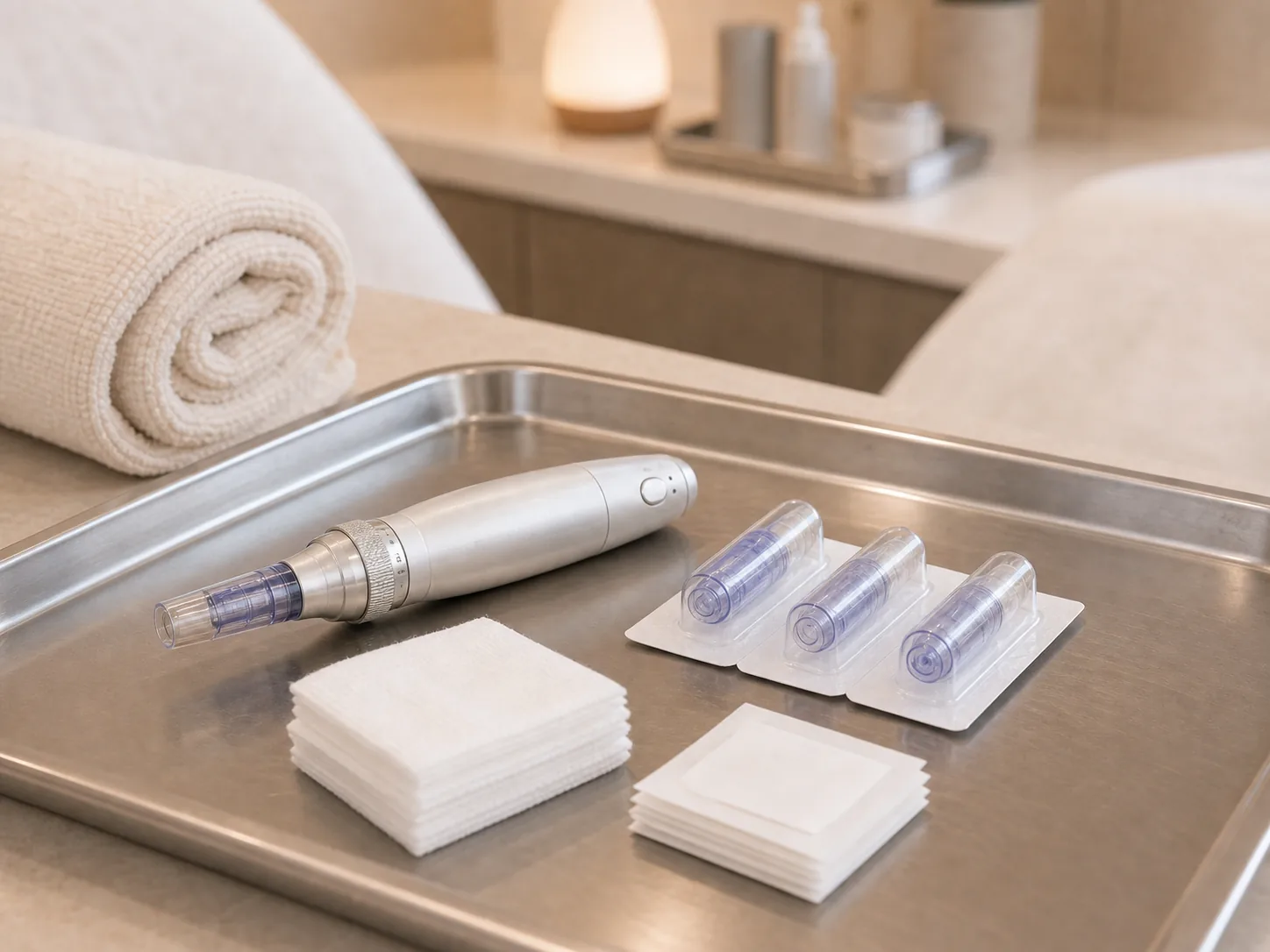
Microneedling uses fine needles on your skin, so it matters who does it, what they use and what happens afterwards. This guide is a checklist for the conversation before you book. Most of the questions come from NHS and JCCP guidance on cosmetic procedures, and I’ve added a few of my own about the device.
I can’t say from here whether microneedling suits you. That depends on your skin and your health, and it’s a conversation for a consultation.
Six questions to ask before you book
- Who will treat me, and what are their qualifications and training?
- Which device do you use, and how is the needle cartridge handled?
- Will I have a consultation and a health history taken before I pay?
- How many sessions do you suggest, and what is the total cost?
- What aftercare will I get, and who do I contact if I’m worried?
- Can I take time to decide?
Who will be doing the treatment
The NHS says to book a consultation with the person who will do the procedure before you decide. Ask what qualifications and training they have, how many of these procedures they’ve done, and whether they belong to a relevant professional association.
If someone says they’re a registered nurse, you can check that yourself, and my short guide shows how to check nursing registration on the NMC register. The NHS says to check doctors on the General Medical Council register. For other professionals it points to two voluntary registers accredited by the Professional Standards Authority, the JCCP and Save Face. The JCCP register covers skin rejuvenation with microneedling and peels.
The device and how the needles are handled
Ask which device they use and how the needle cartridge is handled. I’d expect a clean treatment room and a sealed, sterile cartridge opened in front of you. The NHS suggests asking for information to take home, such as a leaflet from the manufacturer of the product they’ll use, and the same request works for a device.
I use SkinPen, with a sealed, sterile, single use cartridge for each client, opened in front of you. My microneedling page shows how a visit runs, from the consultation to aftercare.
Your consultation and health history
NHS advice is not to pay for a procedure until you’ve had a consultation to make sure it’s right for you. The JCCP asks you to give your medical history thoroughly and honestly, because your practitioner needs it to decide about your treatment and to deal with any problems that come up. It also says your consent should be informed: you’ve been given the relevant facts, both in general and as they apply to you, and you understand them.
At my clinic the consultation has no needles. We talk about your skin and your health, and I check that microneedling is right for you. You’re welcome to bring this list with you.
Sessions, cost and what the price includes
Microneedling is often planned as a series of sessions, so the price of one visit may not show what you’ll spend. The British College of Aesthetic Medicine’s patient information says your practitioner will recommend how many treatments you need. The NHS also says to ask how much it will cost and whether further treatment, if you need it, costs extra.
Ask for the total for the plan being suggested and what it covers, such as numbing cream, any serum added at the end and aftercare products. Results vary from person to person, so I’d be cautious of anyone who promises a specific outcome before they’ve looked at your skin.
Aftercare and who to contact
On aftercare, the NHS says to ask what you can expect, who will look after you, and what to do if something goes wrong or you’re not happy with the result. The JCCP adds that if you have a problem or concern after treatment, the first step is always to contact your practitioner, and that they should tell you how to reach them at any time. Before you leave the appointment, make sure you know how to do that.
The aftercare advice I give for microneedling is in the Aftercare tab of my microneedling page, and you can contact me if you have a question.
What the NHS suggests avoiding
The NHS advises avoiding group treatments and events involving alcohol, treatment vouchers sold online on group discount or voucher sites, mobile services where procedures are done in places such as private homes or hotels, and practitioners who only advertise on social media. It also says you should be offered a cooling off period after a consultation, and that you can walk away if you’re not completely comfortable.
I go through deals and time to decide in more detail in my guide to comparing lip filler quotes, and the same points apply to microneedling.
Where to see how I work
I’m an NMC registered nurse. My microneedling page sets out what a visit involves, and if you’re travelling from further away I also have pages for Newcastle upon Tyne, Cramlington, Blyth and Morpeth. If you’d like to know what happens at a first appointment, I wrote about what to expect at a first aesthetics consultation.
Common questions
How do I choose a microneedling practitioner?
Book a consultation with the person who will do the treatment before you decide. The NHS suggests asking about their qualifications and training, how many of these procedures they have done, and whether they belong to a relevant professional association. If they say they are a registered nurse, you can check the NMC register yourself.
What should I ask about the microneedling device?
Ask which device they use and how the needle cartridge is handled. I use SkinPen, with a sealed, sterile, single use cartridge for each client, opened in front of you.
Is there a register for microneedling practitioners?
Nurses are on the NMC register and the NHS says to check doctors on the General Medical Council register. For other professionals it points to two voluntary registers accredited by the Professional Standards Authority, the JCCP and Save Face. The JCCP register covers skin rejuvenation with microneedling and peels.
How many microneedling sessions will I need?
That depends on your skin and what you want, and your practitioner should recommend a number. Ask for the total cost of the plan and whether anything is charged separately. Results vary from person to person.
Who do I contact if I am worried after treatment?
The JCCP says the first step is always to contact the practitioner who treated you, and that they should tell you how to reach them at any time. Make sure you know how to do that before you leave the appointment.
Where can I see how you run microneedling?
My microneedling page explains what a visit involves, from the consultation to aftercare, and my prices are published in full on my pricing page. Results vary from person to person, so I talk through what to expect at your consultation.
Sources: NHS, Choosing who will do your cosmetic procedure. NHS, Before you have a cosmetic procedure. JCCP, Information for the public on treatments. British College of Aesthetic Medicine, Microneedling patient information.